


Tourism as an Economic growth factor
The World Tourism Organization (UNWTO) is a specialized agency of the United Nations based in Madrid, Spain. The organization has its origins around the tourism industry. The organization holds the World Tourism Rankings, collecting all the information about international tourism and distributing statistical information, the World Tourism Organization is the main center of the tourism industry. From the data published by the state-owned tourism organizations of most countries of the world, the global standard is formulated to verify the downward and upward trend of tourism. It is a member of the United Nations Development Group.


Among the branches of the world economy, tourism is one of the largest and has the highest growth rates that can greatly facilitate the process of developing certain countries. The worldwide tourism industry produced $8.3 trillion in economic value in 2023 and provided employment for 330 million persons. We can observe the relation between tourism and development, meaning that well-developed tourism can grow a region’s economy greatly.
There are of course the more economic gains of tourism whereby its advantages are pegged on the improvement of the economy; in a nutshell the benefits of tourism are as follows –
The following presents one of the most common impacts relating to the economic returns that come due to tourism. Tourists for instance pay for accommodation, food, transport and other related products which will in one way, or the other be of great help to business traders in the tourism sector. It is quite possible to reinvest such revenue into the local economy, meaning it would lead to other economic activities, thus boosting the circuit.
Tourism and economic development refer to the impacts and use of natural and cultural resources for sustainable growth. It is capable of positively affecting the economy in the following ways. First, it provides direct employment for the staff in the operation of hotels, restaurants, and bars but also generates employment in other related sectors such as retail, entertainment, and construction industries.
Introducing it and Economic Development Programs; there is necessity to train local businesspeople. Second, it provides revenues to the government in the form of sales taxes, hotel taxes, airport fees, charges and so on. Third, it enables the development of other sectors, and hereby providing people with multiple sources of income. Fourth, it processes encourages the development of entrepreneurship as well as small business activity.
In addition, these investments do not only yield profit for the tour guide business but also enhance the quality of lives of the people in that specific region while enhancing the aesthetic appeal of the area in order to attract other forms of economic activities. Although currently, the present government is showing concern to the meritorious index between tourism and Economic development.
Key Points Highlighting the Relationship between Tourism and Economic Development:
1.Boosts GDP and Economic Growth: Boosts GDP and Economic Growth:
The tourism industry is very productive; it counts for a part of the Gross Domestic Product. Tourism increases the revenue in the hotel industry, food and drink sector, transportation sector, and other related areas swelling the economy up.
2.Employment Opportunities:
In the case of tourism, it can be seen that the sector engulfs several direct and indirect employment opportunities. Direct employment encompasses those in eateries and drinks, accommodation facilities such as hotels and restaurants, and travel and tourist facilities. The concept of indirect employment is associated with ancillary industries, food chains, and industries of construction.
3.Infrastructure Development:
This is due to the requirement to modernize transport including roads, airports, public transport system, and utilities in order to suit the needs of the tourists. This holds economic advantages as the upgrading of infrastructure facilities is useful for further economically related activities of both tourists and inhabiting citizens.
4.Foreign Exchange Earnings:
International tourism helps in generating foreign exchange since many countries, especially those with negative balances of trade, greatly benefit from tourists’ expenditures. They help in the balance of the economy’s gross earnings and assists in the procurement of goods and services through imports.
5.Promotes Local Businesses:
Economic development results from tourism as it stimulates center businesses like souvenirs, meals, and shows. It helps the small and medium-sized enterprises (SMEs) and enhance the society’s business inclination.
6.Cultural Exchange and Preservation:
Cosmopolitanism is promoted since tourism makes it possible for the tourists to embrace cultural diversity. It can also lead to the conservation of the cultural artifacts and other practices since they become economically important in the tourism industry.
7.Regional Development:
Tourism being the prospect of developing rural and underdeveloped areas as it directs people to those areas they had not visited before. This assist in the dispersion of economic resources better within the country hence making the distribution of the economic benefits to be at least satisfactory.
8.Investment and Modernization:
The tourism industry is one of those that encourages both local and foreign investors. Such investments create modernization of the facilities and services which add the attractiveness to the particular destiny.
9.Improved Quality of Life:
With reference to the economic advantages of tourism, the following are some of the ways through which the quality of life of the local people is impacted positively.
10.Sustainable Development:
Implementing and advocating for sustainable tourism practices helps to make use of tourism’s capability of fostering economic development without eradicating the natural environment. It is also found that there are several ways through which responsible tourism can be used to influence conserve.
Challenges and Considerations
Thus, there are both opportunities and risks of the activity that brings the misuse and must be considered by the policymakers. Casualties of expeditions are employment and income-generating ventures to signify the arrival of tourists. The first challenge is that of sustainability whereby certain development should not have a negative impact on the natural, cultural and or social resources. On the negative impacts, issues such as overtourism and environmental issues like degradation, acts of cultural commoditization, and the problem of leakage are possible effects of cultural activity that need some level of control. But Of course, it is crucial to revive the cooperation of the state and private sectors to bring positive results in the development of the economy.
If sit is not properly controlled and managed, the benefits, which are inherent in developments, may end up ware exercised mainly by large international companies. Thus, cities can be benefited from the sale of local attractions to increase their revenue for economic development.

The tourism industry is known as one of the major economic activities all over the world. The tourism industry is considered as the main tool for the socio-economic development of the present world.
On Approaches to Realizing Tourism Development
In the cases of the positive aspects of tourism and economic development, there is visible enhancement in the growth. To maximize the economic benefits of tourism while mitigating the risks, countries should pursue a comprehensive development strategy that includes the following elements: To maximize the economic benefits of it’s while mitigating the risks, countries should pursue a comprehensive development strategy that includes the following elements:
• Developing it’s human and physical resources
• Marketing the destination in important source markets
• The need to achieve the profile or types of tourists through the diversification of the it’s product.
• Effects of stimulating interconnectivity between it and the rest of the economy
• The above practices and policies hiccups suggest that bringing into reality sustainable it practices and policies is not an easy task.

Analyzing the Multiplier Effect of Tourism Spending
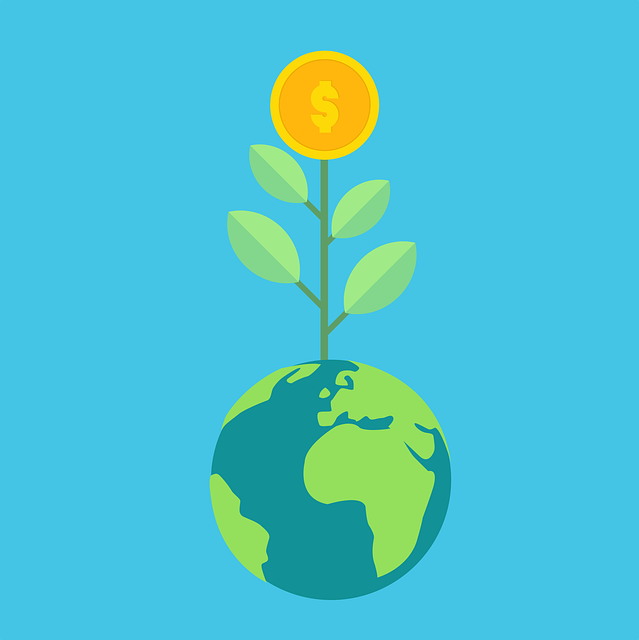
This paper seeks to explain and illustrate the concept of the Multiplier Effect of it Spending.
This in part explains why tourism is such a potent tool in economic development and specifically, why it expenditure has the multiplier effect. However, for the tourism and economic development to meaningful, people must balance tourist and local inhabitants. This multiplier can be very significant and research done indicates that for every dollar spent by a tourist, $ 3- $ 4 is additional circulation in the economy.
The multiplier effect works like this: a tourist is a consumer of a $100 hotel room. The hotel then uses that $100 to provide employees’ wages, purchase products from local suppliers and generate profit. These employees and vendors then use their own proportion of the $100 to buy other goods and services in the same economy. Indeed, each round of spending leads on to the next one and thus the cycle goes on and on – creating more economic activity. The possibilities for the creation of added value in the local economy will be the highest when the greatest proportion of gross tourist revenue is re-built into the economy.
The size of the multiplier, though, depends on factors such as its relation with other sectors in the economy, economic diversification and locals’ ability to spend money earned through it. The connection between it and a country’s economic development produces income. This means that only those countries that employ prudent polices to achieve the full multiplier effect and also use their resources to fund areas that will get the most benefit out of it will experience the most benefits. Development in it and economic opportunities means that public services and facilities can be improved for the tourists.

Tourism and Economic Diversification
A large number of these countries remain highly vulnerable to shocks emanating from the productive structure that is characterized by overreliance on commodities such as agriculture, mineral, and manufacturing products. Tourism is a tool that helps to build the non-oil segment and decrease this vulnerability. Economic Development Is Currently Contributing To The Creation Of New Places In Many Fields. It is among the sectors that most employees, both high and low skilled job positions in treatment, serving invention and professional levels. This makes in suitable for the absorption of excess units of labour and in turn lowering unemployment especially with high population growth rates.
It also leads to the generation of tax for government thus helping governments to get funds for the development of social amenities and other basic needs. It means that if it and economic growth of a country is promoted, then the dependence on a specific industry will automatically come down. It helps to introduce new sources of income and investment to the country which can be useful to compensate the losses in other spheres. It also encourages the setup of ancillary industries in transport, communication, shops and other leisure facilities. What is more, it, being the economic activity, cuts to a country’s natural, cultural, and historical offer, thus encouraging the protection and popularization of these resources.
Of course, it alone cannot resolve all of the problems of a specific country’s economy. The present government is promoting it carrying out economic development as a feature of an organized economic blueprint. The present paper advocates for the consideration of it as one of the development strategies for the diversification of the economy alongside investments in those other sectors. However, if the economic potential of it is targeted and developed, then the countries will not heavily depend on the specific areas and industries as well as will establish more viable economy for tomorrow. And economic development helps a country to capture the attention of international investors and possibly form partnerships with them.
CONCLUSION
Tourism is one of the most significant sources of socio-economic development that helps in generation of employment opportunities for people and helps in churning of revenues that would reduce poverty level. The cultural assets of a country can be protected through it and economic activity. It capitalization covers the improvement of the networking of tourism industry, creation and popularization of touristic destinations, and training of highly qualified professionals for better realization of it’s strong economic opportunities.
Tourism and economic development are therefore consequences of development of a country. Nevertheless, there is need to check and balance how it and economic development is being done in order to be able to support sustainable, fair and accommodative to other economic and social agendas.