


Spain as you may already know is a country with one of the most diverse and rich cultures, beautiful sceneries, and famous festivities and most importantly; a foodie’s haven. The Spanish regional specialities are orientated to reflect the different part of Spain, its terrain, ways of preparation and the contact of Spain with other countries and civilisations occupying its territory. The Spanish food is famous for using spices and herbs that give it a sharp flavor, is rich in olive oil, and radiant in its use of fresh products, and adherence to the conventional ways of food preparation and cooking. This article is devoted to Spanish food: particularities of local cuisine, dishes found in different Spanish regions, with a focus on gastronomic values in Spain. food which may include local foods in Spain differs from one region to the other
Regional Differences of the Spanish Food
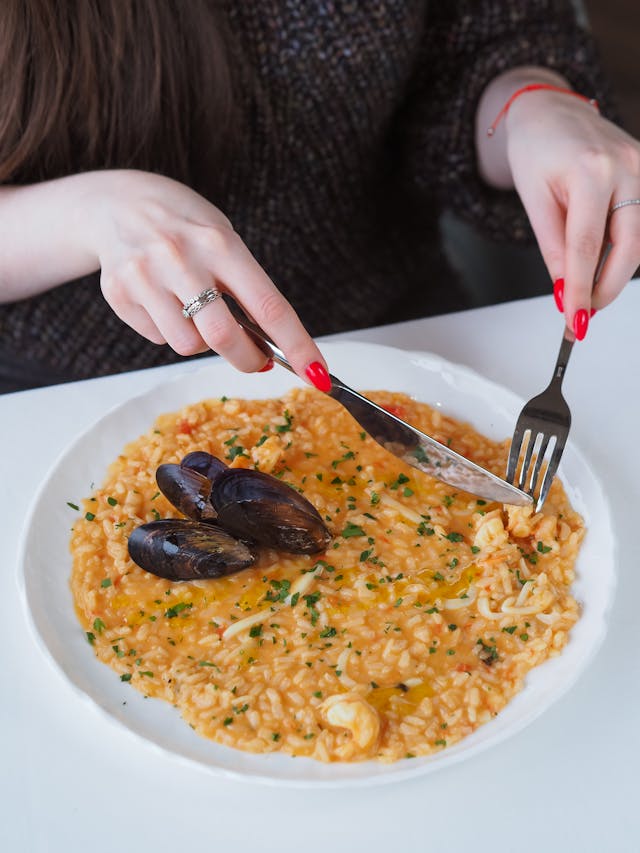
Cuisine in Spain is one of the most remarkable and varied in the world, in each area people can taste different dishes. Having looked at the brief geographical features of the country, one can generalize that the nation can be divided into several culinary areas. Paella is common local foods in Spain more especially in Valencia.
1. Andalusia
Realising its position in the south of Spain, Andalusia is famous for the Moors’ impact on the local food. Spices, fresh vegetables, and seafood are the main correlates of the region’s cuisine. Some of the iconic dishes from Andalusia include:Some of the iconic dishes from Andalusia include:
Gazpacho: An ingenious cold soupy creation prepared from tomatoes, cucumbers, green bell peppers, onions, garlic, olive oil, vinegar and sold bread. The ingredient list reads as if it was made for a scorching hot summer day which, of course, is when this dish shines best. Travellers particularly have something pleasant to say when it comes to local foods in Spain they were served while
Pescaíto Frito: Small pieces of fish coated with some flour and deep fried, and eaten like olutes, it is usually taken as tapas. A dash of freshness is added by putting a squeeze of lemon on it. Tapas are possibly one of the most identifiable forms of local foods in Spain.
Salmorejo: A thicker type of soup prepared with tomatoes, bread, garlic and olive oil : garnished by hard boiled eggs and Spanish ham. Men and women get to enjoy varieties of local foods in Spain available in the markets.
2. Catalonia
Mediterranean and mountain flavors are found at Catalonian located in the northeastern part of Spain. They or the place in particular focuses on the use of fresh produces, seafood and cured meats. Key dishes include:
Pa amb Tomàquet: Just slices of fresh bread rubbed with tomato, then, it is garnished with olive oil and salt. It can be garnished with cured meats, cheese or anything of your choice. Churros with hot chocolate is one of tasty local foods in Spain.
Escalivada: Roasted vegetable dish; continues to have eggplants, bell pepper, onions; could be had with anchovies or olives.
Suquet de Peix: This is a thick fish and seafood soup prepared with fresh fish and other fish products, potatoes, ripe tomatoes, garlic cloves and a pinch of saffron.
3. Basque Country
The improved and modern culinary tradition of the Basque Country is situated in the north of Spain. The cuisine is mainly marine influenced and relates to the Atlantic ocean, pintxos, small snacks seem to be a well developed tradition. Notable dishes include:
Pintxos: Tapas, that is small portions of food, which can be placed on slices of bread with anchovies, peppers, or meats, among others. They are usually accompanied by a glass of wine popularly known as txakoli which is a white wine.
Bacalao a la Vizcaína: Fish that is boiled and served together with an enhancing gravy prepared using red peppers, onions, tomatoes amongst other condiments.
Marmitako: A thick moist potato and tuna fish where onions green peppers tomatoes and paprika are the spices used. Fish and other sea products are some of the local foods in Spain. that are found more abundantly in those regions
4. Galicia
Galicia, located in the north western region of Spain, has the seafood that is perhaps some of the best in Spain. It is unfortunate that the region’s cuisine lacks the sophistication as seen in the case of Europeans; instead, it is raw and bare, which emphasizes on the quality of food items used. Key dishes include:
Pulpo a la Gallega: Octopus stewed and grilled in olive oil with lessons of paprika and coarse salt and it is very famous with potatoes boiled in their skin.
Empanada Gallega: Hearty pie with any type of stuffing – tuna, cod, or meat, and onions & bell peppers. The local foods found in Spain are gazpacho and tortilla española.
Caldo Gallego: A type of soup that is usually prepared by using greens commonly the top of turnips, potatoes, Spanish sausage (chorizo) and pork.
Iconic Spanish Dishes
As is the case with most cuisines in the world, regional foods can be identified in Spanish foods; however, some foods have become famous nationally and globally. These are some of the Spanish foods that should not be missed by anyone captivated with Spanish cuisine. There is a wide range of local food in Spain and many people are often shocked or amazed at that aspect.
1. Paella
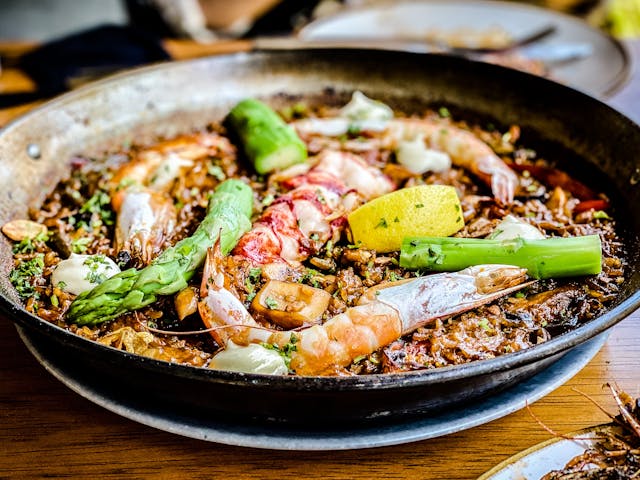
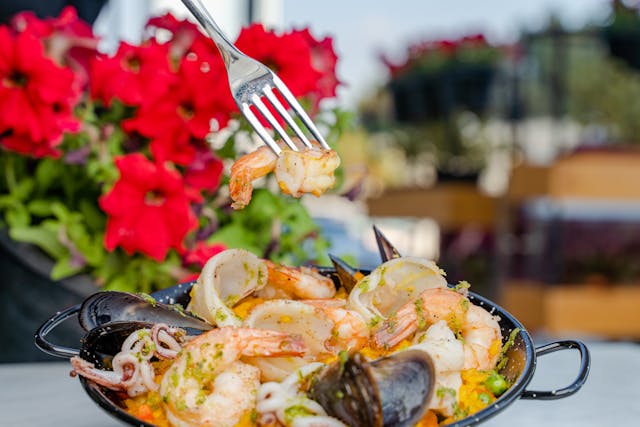
Among all the dishes of Spanish cuisine, paella is well-known all over the world, perhaps, more than any other. Paella is a rice dish that is cooked in a broad and shallow pan pulled from Valencia; and the food is prepared traditionally with the heat source being an open fire. The oldest of them all is Paella Valenciana, ingredients used in the preparation are rabbit, chicken, green beans, and sometimes snails. Paella with seafood and different type of shellfish also is famous. Some essential components are saffron, which produces that fabulous yellow hue of the dish, and sofrito, a type of sauce, made from tomatoes, garlic, onions and other things. Actually, wine forms a box part of the local food in Spain.

2. Tortilla Española
Tortilla Española which is commonly known as Spanish Omelet is one dish that is a fusion of potatoes, onions, and eggs. It called for custard-like base achieved by slowly cooking eggs with other ingredients. It is best consumed HOT or COLD and it is mostly used as a TAPA or LIGHT MEAL.
3. Jamón Ibérico
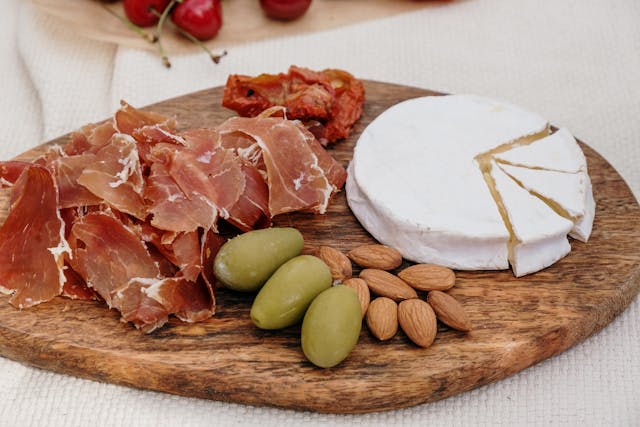
Originally meaning cured ham from the Iberian peninsula of Spain and Portugal , Jamón Ibérico is sourced from Iberian pigs that mainly feed on acorns. It is cured for several of years hence, it has a very succulent and a very good tasty flavor. They meticulously wash and peel it and it is normally eaten sliced and usually consumed raw but can be eaten with bread. The local foods in Spain entails the foods for Spain and the foods are prepared using fresh foods depending on the season.
4. Churros con Chocolate
Churros con chocolate is essentially a Spanish dessert, though it can be eaten in the morning since it is rather on the sweet side. It is a Spanish dish that involves the food majorly being dough pastries made by deep frying, coated with sugar and is usually eaten with thick hot chocolate. The churros is crispy on the outside while soft and smooth on the inside, the melted chocolate complements the churros very well. The well-known local food in Spain is Jamón ibérico.
Food and its Culture in Spain
Meals are significant for Spanish people because a meal is usually considered as a social event, and of course, eating is one of the essential components of social life of Spanish people. Spanish are rather laid back about eating with long lunches and very late dinners being more the norm.
Tapas culture is a social prominent side to the Spanish lifestyle that involves going out for a drink and eating small portions of foods, tapas. The kind of local foods in Spain has therefore been an enjoyed result of assimilation by several cultures in the past.
Tapas Culture
Tapas are a variety of small portions of food usually served and eaten before the main meal or can be accompanying the main dish and can be both hot or cold or very simple or very fancy. They are habitually consumed with a beverage; people do migrate from bar to bar to taste the various forms of tapas. Some popular tapas include: Dogme of Spanish festivals is typically to exhibit the superior local foods in Spain.
Patatas Bravas: French fries that are cooked to accompany a spicy tomato sauce, accompanied by a side of garlic mayonnaise.
Albóndigas: Heinously delightful and heartily satiating; you can never go wrong with traditional meatballs in a luscious tomato gravy.
Gambas al Ajillo: Garlic shrimps or Pasi nga hrimbos nga nakalogo.
La Comida and La Cena are two rather similar Mexican restaurants that mostly differ in the concept of the dishes they offer.
Lunch (la comida) is the main meal of the day in Spain, typically eaten between 2:in the evening it ranges from 00 PM and 4:00 PM. People usually eat more than one dish having a starter, the cooked or grilled dish, and a sweet and then coffee. Dinner (la cena) is usually lighter and eaten later in the evening, often around 9:00 PM or 10:00 PM Any other notation for expressing the time then, such as 24-hour clock, with NO space between the time parts, will not be accepted. It can range from tapas, sandwiches or whatever could be considered as a light meal. Tasting the local foods in Spain is something this food lover would recommend to any gourmet.
Festivals and Food
As for the Spanish festivals or fiestas very usually the different foods and drinks are prepared or offered. For example:
La Tomatina: This festival takes place in Buñol and includes a huge tomato battle; furthermore, people may taste such typical Spanish dishes as paella or gazpacho.
San Fermín: Advancing this, people of Spain are also famous for the bulls-rushing event happening in Pamplona, apart from foods like churros, pintxos, and wines from the region. That is why local foods in Spain is characterized by rather sharp and intense, sometimes even pungent, tastes.
Las Fallas: This is a festival that is held in Valencia whereby huge figures that are made from paper-mâché are burnt. Among the popular products of popular Spanish cuisine, one can meet with such dishes as paella, buñuelos-plin-with-fried-dough-balls.
The Spanish cuisine culture is therefore the sum total of a vibrant and diverse range of taste, method, and mannerism. However, in order to explain the richness and variability of Spanish cuisine, we need go deeper through the regional dishes as well as conventional meals and role of the food in live of Spanish people.
Continuation of examination of regional specialities
5. Castile and León
The region of Castile & León is in the central part of Spanish territory and that is why its food is rather coarse and strong, derived from the farming and countryside traditions. The food here is quite traditional and does not use complex processes and the food is made with the finest local produce. Key dishes include:
Cochinillo Asado: Pork roasted suckling which is traditionally served in Segovia is one of the tastiest with tender and crisp skin. It is conventionally baked in a wood fired oven Du, The main food that accompanies it has been traditionally made of beef. There is a nice local foods in spain that can be found in Spain, and it is necessary to esteem them.
Lechazo Asado: Another local cuisine is roast lamb although it is most famous in Valladolid and Burgos. The lamb is baked tenderly and when one decides to cut the meat they get soft and delicious to taste.
Judiones de la Granja: A type of casserole that uses large white beans in addition to chorizo, black pudding with pig’s ear or snout occasionally. This is a rich dish to comfort the inner person especially with the arrival of the cold month.
6. Asturias
Asturias is one of the autonomous communities of Spain situated in the northern part of Spain, famous for green valleys and mountains. The food prepared here is farm- fresh and lots of recipes are rich like using lots of cheese. Notable dishes include:
Fabada Asturiana: The recipe of the Large White Beans or Fabes with Chorizo and Morcilla and Pork Shoulder means a celebration. It is a rather traditional dish from Asturias that they love consuming particularly during the period when the climate is rather cold. Some of the delicious foods that is found and eaten in the local foods in Spain include deserts.
Cachopo: A plate made of two enormous veal fillets filled with ham and cheese layers; coated with bread and pan-fried. In some of the areas it is usually accompanied with potatoes and any vegetables of the<|reserved_special_token_274|> choice.
Queso Cabrales: This is a robust cheese that has a blue Veined which is prepared using cow’s and goat’s and sheep’s milk. Bonac is made of beef that is matured in limestone caves thus making it quite unique.
Street Food and Snacks
Quick foods and easy to grab foods are among the speciality in Spanish cuisine, mainly because of the convenience they hold. Here are some popular options:Here are some popular options:
Bocadillos
It is a Spanish sandwiches made using crusty bread with various fillings of one’s preference Bocadillos. Some popular bocadillos include:
Bocadillo de Jamón: Usually, it is stuffed with the thin the slices of Jamón Ibérico or Serrano ham and sometimes just a few drops of olive oil or a slice of tomato.
Bocadillo de Calamares: Being a popular dish in Madrid Spain, calamari fritters sandwich is made up of calamari rings that are covered and fried, and usually accompanied by lemon juice.
Bocadillo de Tortilla: Stuffed with Spanish omelette also known as Tortilla española to make it a yummy snack to take with.
Empanadas and Empanadillas
They are small pies made from dough containing, and can be filled with meat, fish or vegetables among other stuffs. It is common in all parts of Spain and is taken sometimes as a snack or as a meal. Empanadillas are substantially smaller and are usually considered as a type of tapas. Some common fillings include:
Tuna and Tomato: One of the most famous mug recipes, tuna, tomatoes, onions, and bell peppers.
Spinach and Cheese: A vegetarian option which has spinach and cheese as the filling for the pastry.
Chorizo and Potato: A warm combination of the Spanish sausage chorizo, potatoes and onions.
Celebratory Foods and Desserts
Spain has a diverse and long-standing sweet-making culture mostly associated with festivals and special occasions across the region. Here are some highlights:
Turrón
Turrón is a Spanish confectionery which is similar to the nougat, its main components being honey, sugar, egg white and almonds or another kind of nuts which are toasted. It’s particularly popular during Christmas and comes in two main varieties:It’s particularly popular during Christmas and comes in two main varieties:
Turrón de Jijona: One of the type which is soft and have the texture similar to chewy candy; it is made from almonds which have been ground to a paste.
Turrón de Alicante: One that is characterized by its hardness and brittleness can be prepared using whole almonds.
Roscón de Reyes
Roscón de Reyes is a ring cake specifically taken on the 6th of January, the other name of which is the Day of the Three Kings. It sometimes has candied fruits on the outside and is filled with cream or custard on the inside.
There is a small figurine and a dried bean placed in the cake; the finder of the figurine has to become king or queen for a day, and the finder of the bean has to host the Roscón the next year.
Flan
Merengón is popular in Spain, it is a caramel layer above the custard cream. It is basic, but yummy; it has almost a cream like consistency and is full bodied.
Spanish Drinks
Finally, a brief evaluation of wholesome Spanish drinks which accompany meals and can be considered as non-conventional features of Spanish dishes.
Wine
Spain has a great number of vineyards and can boast one of the greatest wine collections all over the world; Spanish wines differ from each other due to the differences in the types of terroirs existing in the country. Some notable wine regions and their specialties include:Some notable wine regions and their specialties include:
Rioja: Popular for its red wines that mostly include Tempranillo grape variet. Los vinos de Rioja son sometidos a una crianza en barrica de roble que les permite obtener sabores y aroma muy particulares.
Ribera del Duero: Another celebrated area in producing red wines, especially these produced from the Tempranillo grapes. It has been established that wines produced using the above mentioned method boast of rich tasteful qualities.
Sherry (Jerez): A type of wine created from the fortified grape spirit distilled from wine mixed with grape must; sold in varieties from Fino to Manzanilla to Pedro Ximénez and Moscatel.
Cava
Cava is a sparkling wine which originates from Catalonia and is produced using the method called méthode traditionnelle, which is also known, as the method used in the production of Champagne. This particular alcohol is often consumed during festive occasions and best goes well with most foods.
Sangría
Sangría is a chilled wine beverage that is prepared using red or white wine, chopped fruits, sweetener, and sometimes brandy/ Cointreau. The drink is usually taken during the summer period and can be taken in large quantities especially during social events. Persons having a liking for cheese will have a lot to eat from the local foods in Spain.
The Art of Spanish Cooking
This cookbook shows that the Spanish cuisine is much more than just the recipes and the ingredients; it deals with the methods of Spanish cooking as well an the passion for food. Here are some traditional cooking methods and tools that are integral to Spanish culinary traditions:Here are some traditional cooking methods and tools that are integral to Spanish culinary traditions:
Paellera
Another utensil that is peculiar to this method of preparation for paella is the paellera: it is a rather large, but rather shallow pot. They have a special geometry which lets heat to cook the rice evenly, thus developing the socarrat, which is crispy layer on the base of the pan and much appreciated.
La Plancha
Griddling known as a plancha is widely used in the Iberian peninsula especially in preparing seafood dishes. It is a method of preparing foods through frying where large quantities of oil are not employed but instead uses a flat hot surface to fry the foods and the aim is to retain the tastes and textures of the foods.
La Parilla
Another method of cooking popular in South American cuisine is grilling or barbequing (a la parilla) which is mostly done for the meats and vegetables. This is because the smoky flavor originating from the grill complements the ingredients’ taste.
Slow Cooking
Slow cooking is also characteristic of many classic Spanish dishes that are stews and roasts with intense and warm tastes. This method is highly relevant for areas such as Castile and León where technically complex long-cooked meals are popular.
Conclusion
Thus, the local food that can be tasted in Spain is a unique combination of the dishes that differ with regard to flavors, ingredients, and origins. Spanish food is diverse and ranges from the delicious meals that are associate with the Basque region all the way to the Castile and León region that is more famous for rustic meals. An appreciation of food and its significance in the society can be evidently seen in most Malaysian celebrations, festivals, and even in the daily diet of the people.
Spanish cuisine is discovery, a great discovery of tastes and of those flavours that stick in your memory for ever. When it comes to food, Spain again does not disappoint; think of a succulent paella, a delicious bar of turrón, a glass of Rioju wine. Therefore, open the gate of Spanish food and prepare your taste bud to have an adventurous journey.