


An airline ticket is a document issued by a carrier or travel agency to a passenger as confirmation that a person has purchased a seat on a flight. It can exist in two forms – paper and electronic (e-ticket). Today, you will most likely deal with the digital version, while hard copies are becoming museum artifacts.
It manages the relationship between several airlines involved in a trip (if that is the case). To be more precise, it outlines the responsibilities of the valid carrier that issued the ticket and the operating carrier or carriers that operate the flight. When it comes to flights operated by multiple airlines, only one of them has the ticket at any given time. This right makes the airline responsible for the passenger and updating their status
Airline ticketing process
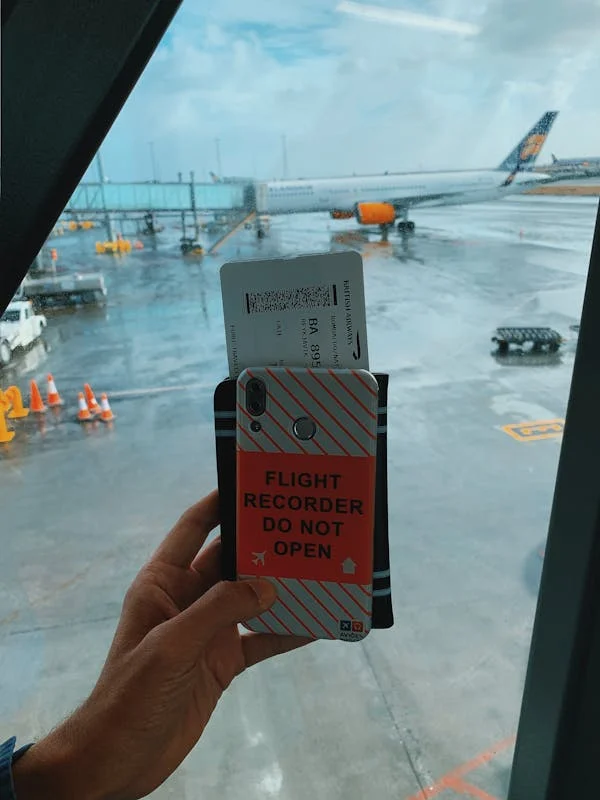
An airline ticket is a document issued by a carrier or travel agency to a passenger as confirmation that a person has purchased a seat on a flight. It can exist in two forms – paper and electronic (e-ticket). Today, you will most likely deal with the digital version, while hard copies are becoming museum artifacts. is the final step in the complex flight booking process. For a traveler buying a flight through a website, it may seem like a single flow as everything happens very smoothly and quickly. But in reality, it consists of three separate steps, each of which involves several processes.
Flight search

The first step is the flight search that can happen on different platforms — airline web pages, online travel agencies, or met search engines.
Airline web pages.

When a passenger searches for a flight on an airline’s website, the query is sent directly to the airline’s Central Reservation System (CRS), with no third party involved. The CRS returns a list of available options for the required dates. Pretty simple and straightforward! Nevertheless, it often happens that the choice will be limited to flights of a particular airline and its partners.
Online travel agencies.

If you want to compare offers from multiple airlines or plan a multi-leg itinerary, online travel agencies (OTAs) are what you need. They obtain flight data from global distribution systems (GDS), air consolidators, and partner carriers. Most OTAs rely on booking engine technology to prioritize results according to business rules and apply pricing markups before showing airfare deals to end users.
Meta search engines.

Platforms such as Google Flights or Skyscanner aggregate information from OTAs and airline CRSs to show the widest possible range of options, including low-cost carriers that usually do not share their flights with GDSs (and consequently, OTAs). Still, meta search engines usually do not support booking. Instead, they redirect the user to the airline website or OTA.
Flight booking

Step number two is booking. When a passenger selects a certain flight, the retailer – be it an airline website or an OTA – checks with the CRS to see if the option is still available at the same price. It then collects the passenger’s data to create a Passenger Name Record (PNR). This digital document contains essential information about the respective itinerary and is stored in the CRS.
Passenger Name Record (PNR): Meaning, Purpose and Future Play Button
PNR Explained
Once the passenger has entered all the mandatory details, the system generates a booking reference – a unique code that serves as the address of the PNR file in the CRS and confirms the reservation. Passengers receive such codes via email and can use them to track their flight status, change itinerary details, add accessories or cancel the trip.
Ticketing

PNR is not enough to enable ticketing. Passengers still need to seal the deal with money. For this purpose, both airlines and OTAs use payment gateways – third-party services that process electronic transactions and ensure data security. Today, in most cases, passengers pay for the flight immediately after entering all booking information.
Although the bank reserves the money on your credit card when you book the trip, it can take up to three days to verify the payment details, confirm the transaction, and check if the seat is still available (yes, one more time.) This is why there is a lag between the reservation (when you get the PNR number) and the actual ticketing.
Once the payment is confirmed, the airline adds the corresponding fare information to the PNR document. This specific record serves as the basis for issuing the ticket.
Finally, the passenger receives an itinerary receipt via email. This document reflects the successful purchase of the e-ticket. You can print it as many times as you want or download it to any device. The airline stores the e-ticket in its reservation system.
However, note that the receipt does not allow you to board the plane. To take your seat on the flight, you must check-in online or at the airport and receive a boarding pass (printed or electronic) generated by the airline’s departure control system.
E-ticket itinerary receipt: what information does it contain?
The itinerary receipt contains all the necessary information about air travel, allowing passengers to manage their trip, go through the check-in process, and keep important details related to the trip at hand. And although the structure and design of the document varies from airline to airline, the data is usually divided into the following logical sections.
An example of a passenger receipt. Source: Quora
Passenger and ticket information

The passenger and ticket information section shows the passenger’s name, frequent flyer code, e-ticket number, booking reference (PNR code), and information about who issued the ticket.
The 13-digit e-ticket number

The 13-digit e-ticket number is a unique identifier associated with a particular passenger and flight, which is never used again, the first three digits are the airline code assigned by IATA that tells us who issued the ticket. For example, 125 represents British Airways and 176 represents Emirates. The next 10 digits are the serial number.
The booking reference

The booking reference consists of 6 characters – letters or letters and numbers. The code is generated by a special algorithm to create a unique combination.
Both the ticker number and the booking code can be used to get itinerary information, manage bookings, and check in for a flight.
Travel Information

The travel information section begins with a flight number – an IATA 2-letter airline identifier (for example, LH means Lufthansa) and a route number that can have up to 4 digits. For example, DL318 is a flight from Boston to Seattle, operated by Delta Air Lines.
In addition, the section includes departure and arrival times, dates, airports and sometimes – terminals. If you see +1 near the arrival time, it means you will arrive at the destination the next day of departure. Here, you can also find your class of travel and baggage allowance – or the maximum weight and size of bags allowed to check in for free.
Fare and Additional Information

The Fare and Additional Information section specifies the fare, charges and tax details along with the mode of payment. It also gives a brief description of the refund and cancellation policy applicable to the particular ticket.
Key accreditations forAn airline ticket : IATA and ARC

An airline ticket is not only complex but also a highly regulated process. Airlines want to be sure they will be paid for seats. This resulted in the emergence of large organizations that handle transactions between carriers and distributors (travel agencies, travel management companies, and others). The latter must obtain special accreditation to sell tickets on behalf of airlines. Globally, there are two major companies that offer such licenses – the International Air Transport Association (IATA) and the Airlines Reporting Corporation (ARC).
BSP from IATA for travel agencies outside the US

Founded in Cuba in 1945 and currently headquartered in Canada, IATA is the world’s largest airline association, with 290 member carriers in 120 countries. Among other activities, it manages an internal payment processing system called the Billing and Settlement Plan (BSP) that collects money from all travel vendors and distributes it to airlines. It provides a secure way to control financial operations for parties involved in ticketing.
Outside the U.S., only IATA-certified travel agencies can use BSP and issue tickets on behalf of member airlines.
Read our article to learn how to get IATA accreditation.
Low-Cost An airline ticket

An airline ticket model we’ve been describing so far refers to full-service carriers (FSCs) that offer allocated seats, checked baggage, food and beverage on board, in-flight entertainment, and other services and comforts. Most FSCs are IATA/ARC members and distribute their inventory through global distribution systems. But this is less the case with low-cost carriers (LCCs).
LCCs reduce the price of a flight by offering a single fare with no additional fees, flying from secondary airports, and relying on direct online distribution instead of costly GDS intermediation. But what about ticketing? Although some LCCs do deal with ARC/BSPs, most of them avoid this type of membership and the associated fees.
By eliminating intermediaries, LCCs bundle booking and ticketing in a single step. Once the airline charges for the flight, it sends back a reference number that passengers can use to view and change the booking (e.g., add additional services or cancel the trip), check-in online, and obtain a boarding pass. Hence, no tickets are issued.
Travel agencies still have some ways to book and ticket LCC flights through GDSs for their customers – if regular e-ticketing is not an option.
ARC for U.S.-Based Travel Sellers

An airline ticket Reporting Corporation has existed in the U.S. since 1985 and currently includes 230 airlines and 10,700 travel agencies. Just like IATA, it mediates financial operations between agents and airlines using its own payment processor. All companies registered in the U.S. or U.S. territories must have an ARC certificate to issue tickets for its member airlines.
Read our article to learn more about ARC accreditation options and how to get them.
The choice of accreditation for a company attempting to do ticketing will depend on whether it is U.S.-based or not. But generally, large travel corporations have both ARC and IATA accreditations to verify their credibility.
To learn more about the two payment systems – ARC and IATA BSP, read our article: How They Work.