


As there are many places to visit in Germany, the local foods in Germany are very famous. Tourists here like German local food a lot. Below is a discussion about local food in Germany. Some most interest local food in Germany.
Table of Contents
Local food in North Germany
Classic North German cuisine is characterized by fresh fish dishes near the sea and rivers. More domestically, kale is traditionally served as a winter hardy meat side dish or with turnip stew. Also typical of Hamburg are Labskaus, Finkenwerder Pleiss, Hamburger Panfis and the sweet Franzbruchen with cinnamon.
Local food in South Germany
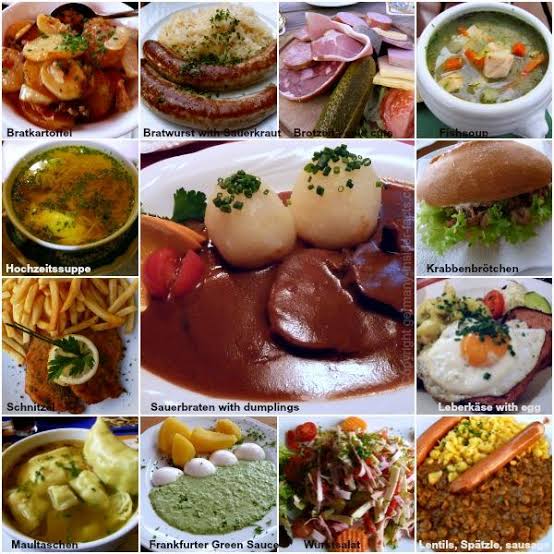
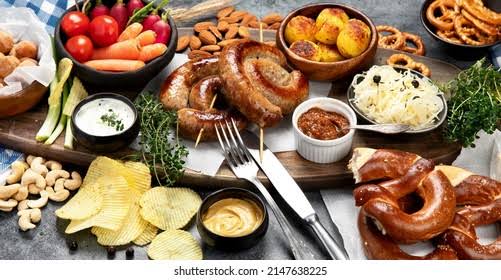
From an international perspective, southern German cuisine is best known – so it’s no surprise that Bavarian cuisine is often equated with German cuisine abroad and that these dishes are considered “typically German”. Hardy meat specialties such as meatloaf, white sausage, roast pork and knuckle are particularly popular here. Also essential in the south: spaetzle, dumplings, potato salad and sauerkraut.
Local food in East Germany
German recipes from East Germany are characterized by their creativity. In the GDR era you had to do the best you could with the materials available. A hunting sausage is made from bread or tomato sauce tomato paste and ketchup as a schnitzel. GDR recipes know how to surprise and are now an integral part of German cuisine! Eastern European influences can be seen today in East German classics such as Solyanka, Königsberger Klopse, and Goulash. Classic Berlin cuisine is particularly characterized by down-to-earth, simple home cooking.
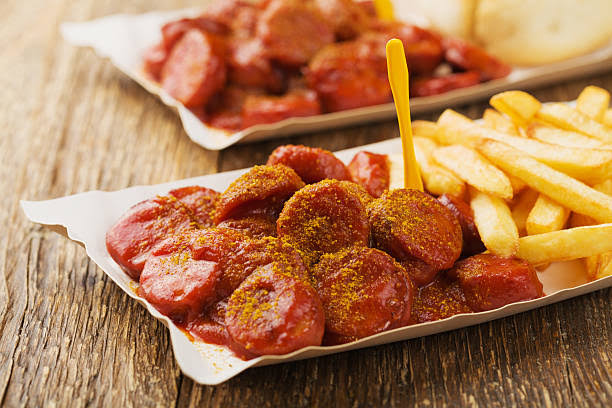
Local Food in Germany from the West of the Republic.In the Ruhr area, currywurst is a real specialty. Otherwise, Rhenish cuisine is characterized by simple, hearty dishes, with which Rhenish Sauerbraten and Heaven and Earth are best known. In the border region with France, tarte flambée and other classics from Alsace are also common.
Garman drink
Beer culture is closely associated with Germany’s purity laws Countless breweries can be found across the country. A Bavarian wheat beer, an oriental black beer or a full-bodied pilsner almost always goes well with local food in Germany. Don’t forget the German wines, which are equally fine accompaniments to the food. According to a 2022 market survey, the most popular beverage among Germans is coffee, followed by beer and mineral water, reports the German Coffee Association.

Local food in Germany Berline
Traditional Berlin dishes include kasseller with sauerkraut, roasted liver with apples, onions and mashed potatoes, and roast goose with kale and dumplings, beef brisket with sauerkraut and pea puree and horseradish. Small dishes include potatoes with bacon, liver sausage with black pudding and mashed potatoes, Königsberger meatballs with capers and mashed potatoes, cutlets with potato salad, minced applesauce with onions and parsley, and potato pancakes with eggs.
Fish, which was more on every menu than today, was caught from Havel and the abundant surrounding waters and used in dishes such as green eel with Spreewald cucumber, perch in beer sauce and fried pike with bacon salad. Carp, tench, roach and the popular havel zander are local food in Germany species and are therefore represented on the Berlin menu. Herring is also very popular as a marine fish.
Newly tapped Berlin Pilsner Berlin looks back on a long brewing tradition. The most common type of beer is the pilsner. The Berliner-Kindle-Schulthais brewery, part of the Radeberger Group, is the city’s largest beer producer. However, beers made by Berliner Pilsner, Berliner Kindle, and Schultheiss are not among the best-selling brands of beer in Berlin or local food in Germany as a whole. Berliner Weiss is a wheat beer brewed as “Weiss Green” or “Weiss Rot” (with raspberry syrup with a dash of Woodruff).
Local food in Bayern Munich.
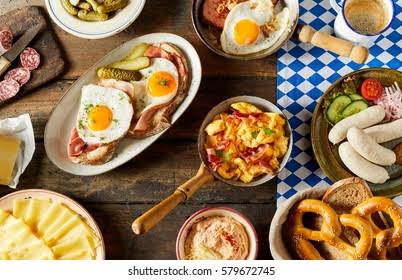
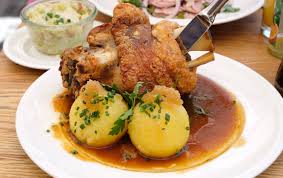
Bavarian cuisine: roast beef, beef knuckle, white sausage and of course dumplings, dumplings, dumplings. Plus a pint of beer and a good dose of cosiness. Almost everyone who grew up outside the Free State has had an idea of Bavarian food – in Kassel or Kuala Lumpur, Potsdam or Portland.When the crust is crispy, the meat tender and the sauce spicy, roast beef is a treat you can enjoy long after your trip to Munich.And you have to admit, they’re not wrong. Roast beef, often with dark beer sauce, served with potato dumplings and coleslaw, is available in almost every Munich tavern. If the crust is crispy, the meat is tender and the sauce is spicy, roast pork is actually a treat you can enjoy long after your trip to Munich. And you can take that literally, because pub kitchen folks aren’t exactly fussy when it comes to calorie counts. Come here and enjoy the local food in Germany.
Some local food in Germany that are very famous.
Buckwurst
In the mood for sausage? Yes, and in the mood for beer!This is how the name is said to have come about. Who invented them? We speak Bavarian and refer to the “Bavarian Dictionary” of 1827 where bow and bow appear as a “popular old Munich breakfast”. Think about it, Berliners say: In 1889, the Kreuzberg pub Robert Scholz first served Jewish butcher Benjamin Lowenthal’s (kosher) boiled sausage with Tempelhofer buckbier. Revelers were thrilled and the bockwurst boom began.
In Halberstadt, on the northeastern tip of the Harz, boiled sausages were first canned in 1896 – typically German products such as Halberstadt sausages are still a market success today.
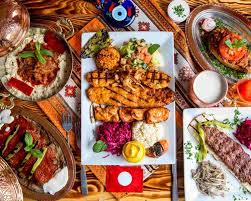
Pumpernickel
The ultimate German bread!Pumpernickel is so typically German that English record player Chris Howland, who was popular in the 1960s, called himself Mr. Pumpernickel. For Germans, on the other hand, it’s the bread of Westphalia – nutritious, long-lasting, boring.
But when Johann Laffer searched for “Germany’s best baker” with ZDF in 2014, Arno Simon of Lohne near Harford won the title, not least with his recipe for pumpernickel bread: rye meal, sourdough, water and salt, let it rest for an hour, Bake for 24 hours. Sounds simple? The quality and accuracy of the material is what matters.Pumpernickel’s Best Companion: Butter. and chester cheese. And oysters! Because of boredom. Pumpernickel is also great as a breading.
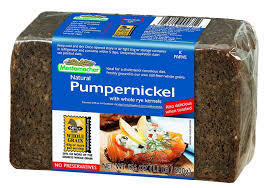
Print and gingerbread
Just ask someone from Aachen about gingerbread and someone from Nuremberg about printing! Rhinelanders and Franconians never see eye to eye. It is very tasty local food in Germany.
In Nuremberg we stick to modern gingerbread from the chefs of Franconia’s most creative chefs “Essigbrätlein”. Or we drive to the baker Arnd Erbel in Dachsbach, one of our heros.
Metbrochen.
“How can you eat it?” Some Germans when they saw sushi for the first time and saw their beloved Metbrochen – which they have known since childhood.
There are almost as many Mettwurst recipes as there are butchers. Raw beef is sometimes coarse, sometimes thinly sliced, sometimes smoked, sometimes air-dried, sometimes spreadable like tea sausage, sometimes tough like salami.Despite all the variations, Met is a pan-German sausage. Unlike the supposedly elegant Tatar, products like the supposedly rustic Mate have yet to make it into the creative regional kitchen. It’s time to eating local food in Germany.
Pretzels
Before the pretzel goes into the oven, it is dipped in caustic soda. How do you come up with such a method? at random
In Swabia a pretzel baking tray is said to have accidentally fallen into a tub of lye, while in Bavaria a traveler is said to have entered the cleaning solution instead of the sugar solution while glazing.
Who makes the best pretzels? Friendships have already been broken over this question. We demand: “Hoffisterei” in Munich and “Königsbach” in Stuttgart! A pretzel festival is celebrated every year in Mainz, in the district of Bretzenheim (where else.
Blue cheese:
Cheeky like Weixler Basil.The French had a monopoly on blue cheese Roquefort made from sheep’s milk for a long time. Until Basil Weixler came along in 1927. The Upper Bavarian developed a cow’s milk blue cheese in his cheese dairy in Waging am See. Because he cheekily called it “mountain Roquefort”, the French took the case to court. Weixler lost, but still profited, because the high-profile process made his cheese known nationwide.This food is local food in Germany. He still does, as the “noble mushroom” of the private Bergader cheese dairy. Their know-how with blue mold led to the popular innovation “Bavaria Blu” in 1972, a soft cheese (that was new) made from mountain farmer’s milk with white and blue mold.
These food is very famous and delicious local food in Germany.