


This 10-days Uzbekistan trip plan will guide you to showcase the best tourist destination in Uzbekistan.Uzbekistan attracts the attention of the whole world with its many historical and architectural monuments, diverse climate and rapid development.

Make plan for your trip
For centuries, Uzbekistan was located on the path of the Great Silk Road trade, merchants and travelers, geographers and missionaries, conquerors and conquerors. At the same time, Uzbekistan is becoming one of the fascinating tourist destinations for those interested in the enterprising, culture, history, tradition and exotic countries.
Table of Contents
Day 1: Arrival in Tashkent
Morning
Arrival and Hotel Transfer: After landing at Tashkent International Airport, transfer to a nearby hotel for check-in. You will get here many hotel like Hotel Uzbekistan, Hotel Muntazir, Kamal Hotel, Chinor Garden Hotel and etc. and make sure you get enough of rest and prepare for an exciting journey ahead. This is the first step of your Uzbekistan trip.

Tashkent International Airport
Afternoon
Independence Square: Start your Journey from visit to Independence Square, which is the largest city square in Uzbekistan. The square unites two historical centers – the Old City and the new part of Tashkent. In the center of the square, there is a monument “Independence and Goodness”, on which a bronze sphere with a planet engraved with the territory of our republic is placed as a symbol of the recognition of our national sovereignty by the world.

Independence Square
At the bottom is the statue of “Mother Bakhtiyar”. In this Monument, an ordinary Uzbek woman with a kind face and eyes shining with happiness is a symbol of the Motherland, life and wisdom. Her eyes are on the most precious treasure in any mother’s life – her child, who represents the birth of a young independent nation.
The monument represents peace, prosperity, confidence in a happy future and happiness for present and future generations. It is also an expression of unconditional respect for women in a country that is building a democracy and a free civil society, declaring human rights and interests as a priority.
Evening
Amir Timur Square, Tashkent: When Tashkent was serve as the main office of the Turkestan Military Command in the 19th century, which made up the Russian Empire, in the heart of Tashkent this square bears the name of Amir Timur, who was the commander and creator of a vast medieval empire.

In the XIV century at the Centre of this square, as commander and statesman there was established a monument of Ami Timur. The pedestal of this monument is engraved the famous motto of Amir Timur’s in four languages “Power is in Justice”. One of the main attractions on the Uzbekistan trip is this plaza.
Day 2: Tashkent City Tour
Morning:
Hazrat Imam Complex: Then next day at morning visits the Hazrat Imam Complex. One of the religious monuments of Tashkent is Hazrat Imam Ensemble, popularly known as Hast-Imam. The square is located behind the old city, which survived the great earthquake of 1966. The complex was built on the burial site of the scientist and religious figure, the first imam of Tashkent, Kaffol ash Shoshi.The complex consists of Tillasheikh Mosque, Abu Bakr Kaffol Shoshi Mausoleum, Baraq Khan Madrasa and Imam al-Bukhari Islamic Institute.

A library has been opened here for visitors, where many manuscripts of oriental literature have been collected, including the Koran of the third caliph, Uthman. This book, which was written in the 7th century, traveled extensively in many countries. This ancient holy book is quite large and contains 353 parchment sheets.
The book was brought to Uzbekistan during the time of Amir Temur. Russian scientists have studied and confirmed the authenticity of this book.
A variety of imported antique plants are planted on the territory of the ensemble, and storks nest in Hast Imam from spring to autumn. Hast Imam is especially beautiful at night, when the lights are on, creating the illusion of an oriental fairy tale. So we think you must should visit this place, that’s why we select this place for your Uzbekistan trip plan.
Afternoon:
Chorsu Bazaar: Explore this busy market for local goods, spices, and handicrafts. Beauty in rastas, abundant products, wide rows, friendly sellers – these qualities belong to Chorsu market, which is one of the attractions of Tashkent. Just a two-minute walk from the market, you can reach the ancient Kokaldosh madrasa and Khoja Ahror Vali mosques.

In the center of the “Old City” is one of the main attractions of Tashkent, the Chorsu market, which has been famous since the Middle Ages. In this market, you will feel as if you have fallen into an oriental fairy tale. The entire history of Uzbekistan is embodied in the market, where you can find ceramics, hats, national costumes, oriental sweets, spices, fruits, vegetables, clay products, handmade souvenirs, books, gifts. , you can find scarves made of national fabrics and other products you need.
It is impossible for you to make a list from the variety of products. This thriving market is a crucial component for this Uzbekistan trip.
Evening:
Tashkent TV Tower:

Tashkent TV Tower
Enjoy the tallest tower in Central Asia. Tashkent TV Tower, a monument of Soviet modernism, can be seen from the Tsar’s side of the capital, which has been expanding for 40 years. The tower glows like gold at night thanks to the 250 lights installed on it a few years ago. You may add this place in you Uzbekistan trip plan and may enjoy a fantastic moment.
Day 3: Tashkent to Samarkand
Morning:
Train to Samarkand: Travel at a high-speed train to Samarkand, and enjoy a prominent Silk Road city that is popular and well known for its historical and architectural wealth. There are beautiful views of the Uzbek countryside throughout the route. That’s why recommended this train journey of this 10 days Uzbekistan trip.

This Tashkent-Samarkand railway line is a high-speed and modern railway line connecting Tashkent and Samarkand . The total length of the railway is 344 km and it is almost newly built. The main part passes through 4 regions of Uzbekistan: Tashkent , Jizzakh , Syrdarya and Samarkand .
Afternoon:
Registan Square: In the afternoon Visits the iconic Registan Square. The word Registan means “sandy place”. In Registan square, the decrees of the rulers were read, and various celebrations and events were held.
This architectural complex consists of Ulugbek, Tillaqori and Sherdar madrasahs. The walls of the madrasahs are decorated with tiles, and the doors of the madrasahs are inscribed with verses and chapters of the Qur’an.

Registan Square, which contains the most unique examples of architecture in Central Asia, was included in the UNESCO World Heritage List in 2001. This square maybe basis of any Uzbekistan trip plan for any days.
Ulugbek Madrasa:

Ulugbek madrasa, the first madrasa in the complex, was built in 1417-1420 by Ulugbek, a Timurid sultan and scholar. Ulugbek Madrasah was one of the most prestigious educational institutions of the 15th century. Many scientists and philosophers have grown up among the students of this madrasa.
Sherdar Madrasa:

The Sherdar madrasa, built in 1619-1635, is located opposite the Ulugbek madrasa. Madrasa has 2 floors. The name of the madrasa comes from the image of a lion chasing a white lion at the entrance. Ulugbek Madrasah was used as a basis for the planning and decoration of the building. In this madrasa, during his time, two additional winter study halls were also built for students.
Tillakori Madrasa:

Tillakori Madrasha
Tillaqori madrasa, located between Ulugbek and Sherdor madrasas, was built by Yalangtoshbi Bahadir in 1646-1660. Due to the large amount of gold used in the decoration of this monument, this madrasah is called “Tillaqori”, which means “worked with gold”. “Tillaqori” was used not only as a madrasah, but also as a central mosque.
Even today, various events such as festivals and concert programs are held in Registan square. You may also include this site in your Uzbekistan trip plan, which makes feel you the best splendor architectural of Samarkand.
Evening:
Gur-e-Amir Mausoleum: Then in the evening you will visit the last resting place of Timur, that is also known as Tamerlane, the conqueror who established the Timurid Empire.
Gūr-e Amīr, mausoleum of the 14th-century Mongol conqueror Timur, or Tamerlane, in Samarkand, Uzbekistan. Though it has suffered from time and earthquakes, the monument is still sumptuous. Completed in 1404, it was originally intended to be the tomb of Timur’s grandson Muhammad Shah, but after Timur’s death in 1405 he was interred there as well, along with other members of his family.

The extant structures in the complex consist of a chapel crowned with a ribbed blue-tiled dome, enclosed by a wall, and fronted by an archway. The interior walls are covered with elegant turquoise arabesques and inscriptions in gold. The Gūr-e Amīr is one of the properties included in the 2001 designation of Samarkand as a UNESCO World Heritage site and we think the mausoleum will be wonderful place on your Uzbekistan trip plan.
Day 4: Samarkand Exploration
Morning:
Bibi-Khanym Mosque: Visit this historically wonderful mosque, which was one of the biggest in the Islamic world. This Bibikhanim complex (Amir Temur mosque) is one of the largest historical structures in Central Asia. Historian Ghiyasiddin Ali Yazdi in his work “Zafarnama”, “…on the fourth day of the month of Ramadan Sharif in the year 801 (Hijri) (May 10, 1399 AD), Amir Temur chose the best place in the capital for the mosque.
Famous craftsmen and architects drew up the project of this huge building and at the most auspicious moment began to build its foundation…” he wrote. The mosque is also called the Bibikhanim Mosque because Saraymulkhanim – Bibikhanim led the construction of the mosque.

The total area of the mosque is 167x109m, and there were high minarets in the corners, which have not been preserved until us. Before the renovation, the mosque consisted of 6 architectural parts that were not connected to each other.
In the middle of the yard, a huge marble slab was installed in the middle of the 15th century by order of Mirzo Ulugbek (a special chair for reciting the Qur’an). Its surroundings are decorated with elegant borders, muqarnas, plant-like patterns and inscriptions.
The double-layered gate is made of seven different iron alloys “haft josh”. Holy Qur’anic verses are written on the surface of the dome of the mosque, and the dome is decorated with turquoise tiles. Through visiting this mosque you will get fantastic experience in your Uzbekistan trip.
Afternoon:
Shahi Zinda Memorial Ensemble: Then visit the Shahi Zinda Memorial Ensemble. This place is one of the most valuable places in Central Asia for pilgrims. The mausoleum is associated with Qusam ibn Abbas, the leader of the Islamic religion, the cousin of the Prophet Muhammad.
According to legend, Qusam ibn Abbas was attacked here, but he hid in a well and went to heaven from here alive.Therefore, this place is sacred for Muslims, and for this reason, every ruler tried to build a mausoleum in Shahi Zinda and bury his loved ones here.

Shahi Zinda mausoleum complex
However, this place is significant not only for this, but also for its architectural solutions – the buildings are made of blue and turquoise tiles and are considered the best masterpieces of architecture from the 11th century to the beginning of the 20th century. For these uniqueness we select this memorial for plan of you Uzbekistan trip.
Evening:
Siab Bazaar:

For experiencing the tastes of Samarkand’s food, Visit this market. In addition to meeting people, the bazaar offers typical Uzbek fare such candies, dried fruits, and freshly baked bread. By visiting this delightful market will be end your day and part of you Uzbekistan trip.
Day 5: Samarkand to Bukhara
Morning:
Transfer to Bukhara:

way to Bukhara
In the 5th day’s Morning, you will travel from Samarkand to Bukhara that is another part of Uzbekistan trip plan, and will experience an ancient Silk Road city. During the crossing city, you will enjoy Uzbekistan’s people rural life and attractive view of this country.
Afternoon:
Labi-Hovuz: For visiting at afternoon, you will keep this place in your plan for Uzbekistan trip. There are many historical facts that this ensemble is directly related to the name of the Prime Minister of Bukhara Emirate, Nadir Devanbegi.
Initially, together with Labi Pool, Nadir Devonbeg’s house and caravanserai will be built here. It was planned to transfer the caravanserai to the foundation property and cover the expenses of the house.
But the Emir of Bukhara at that time mistakenly declared the Caravanserai in the Labi Pool ensemble as a madrasa. In this way, the palace officials, who could not get past Amr’s face, turn the Caravanserai into a madrasa.
This situation is also evident in the construction of Nadir Devanbegi madrasa. Unlike madrasas built on the same plan in the emirate, there is neither a mosque nor a large reading room inside the Nadir Devan Begi madrasa. Later, the rooms of the caravanserai will be adapted to the activities of the madrasa. Nadir Devonbegi Madrasah and Khanaqah operated until the invasion of Tsarist Russia.

There are also many legends about this structure in folklore. In one of the stories, Labi Hovuz and its surrounding buildings were built for the price of ziraq given as a dowry.
Although Nadir Devonbegi himself was a high-ranking official, his family belonged to the middle class. Devonbegi has a thirst for knowledge from a young age and quickly rises through the ranks and is appointed as the Prime Minister of Bukhara Emir, Devonbegi.
While working at Amir’s residence, he falls in love with the daughter of a rich and high-ranking man and makes her a suitor. The dowry is given as a pair of golden zirak studded with precious stones.
This dowry for the bride seems to be small and the girl is also upset. The reason is that the bride-to-be lived in a very rich family, and the groom was not very wealthy, he was the Prime Minister of Bukhara Emirate – Devonbegi. Nevertheless, the girl agrees to the marriage and the wedding takes place.
Like most ladies of the court who keep their gold jewelry in small chests, the woman of Devonbege keeps her gold jewelry and these trinkets in a chest.
Meanwhile, several years pass. One day, when a woman opens the chest, one of the pair of earrings is missing, and she cannot find it. After that, the devonbeg’s wife raises a commotion in the house, saying that there is a thief in our house, she makes noise everywhere. At this time, Nadir Devanbegi came and calmed his wife down, saying that he bought the zirak because he needed a pair.
After some time, Nadir Devanbegi arrives and offers his wife to tour the city of Bukhara. Devonbegi takes the woman to the newly completed Labi Hovuz ensemble. Such a quiet corner, a large pool and beautiful buildings will fascinate the woman of the owner.
“Who built such beautiful buildings and ponds, when were they built?” he asks Devonbegi. Nadir Devan Begi mentions a zira he received some time ago and says that he built these buildings for one zira. Only after that, the devonbegi’s wife realizes how valuable this pair of zirakas given as dowry is.
To date, the Labi pool complex in Bukhara has been renovated and has become a favorite place of the city’s residents and tourists.
Along with the cool breeze of the Labyrinth Pool and its lighted fountains, unlike other historical monuments in Bukhara, this structure is crowded even in the evening and offers all kinds of services to visitors and I think this place will make greats of your Uzbekistan trip.
Evening:
Nadir Divan-Begi Madrasah: Madrasa of Nadir Devanbegi (original name: Madrasa of Nadir Devanbegi) is an architectural monument in Bukhara . It was built by Nadir Devanbegi (Nadir Mirza Togay ibn Sultan), the minister of Bukhara Khan Imamquli Khan ( 1622-1623 ).

Nadir Devonbegi madrasa is located in the old city of Bukhara. It is located in the eastern part of the Labi-Pond ensemble . Currently, the madrasa is included in the national list of immovable property objects of the material and cultural heritage of Uzbekistan. Out of all Madrasah that listed in your Uzbekistan trip plan this madrasah is a unique lovely place.
Day 6: Bukhara City Tour
Morning:
Ark Fortress: Explore this another enormous castle in the part of plan for Uzbekistan trip, which is the oldest building in Bukhara and was used as both a military and a royal home. Bukhara arch is an ancient arch in the city of Bukhara , Uzbekistan ; a monumental castle rising almost 20 meters above the surrounding area and occupying an area of about 4 hectares.
The castle is the oldest architectural and archaeological monument of Bukhara. This fort is the oldest part of the city with centuries-old layers of ruins that make up the hill.

Ark Castle
At one time, the Arch towering over Registan Square was a symbol of greatness, power and invincibility. On one of the walls of the arch hangs a large leather whip, which was once a symbol of power in the Bukhara Emirate.
Afternoon:
Faizulla Khojayev House-Museum: For properly execute Uzbekistan trip you also explore this Place and experience the new event. This building is located in the center of Bukhara, at 70, Abdulla Tokai Street. The house-museum first belonged to the famous merchant Ubaidulla Khoja Kasim Khojayev, and then it passed to his son Fayzulla Khojayev. The area is 3 hectares.
According to Uzbek architectural traditions of the last century, the house is divided into two parts, an outer courtyard for men and various receptions, and inner courtyards for mahrams and women.

It also consists of utility rooms, a central “guest house” living room, several small living rooms and hallways. The rooms are decorated with carvings, antiques, exclusive furniture and unique decorations. In the rooms you will find expensive dishes, household items, clothes, porcelain and other luxurious exhibits of that time.
Ubaydullo Khojayev invests a lot in the education and comprehensive education of his followers. He brings the best teachers of that time for his children, sends his sons to study in Russia.
Fayzulla Khojayev decided not to follow in the footsteps of his merchant-entrepreneur father, but to engage in the activities of the state, achieving considerable success in this field and becoming a real Uzbek politician.
In 1916-1920, he became a member of the “Young Bukhara” party and quickly assumed the leadership role. His partner and after some time his close friend was the historian and poet Abdurauf Fitrat. Faizulla Khojayev puts forward the ideas of Jadidism.
In 1937, he was arrested by the NKVD, and in 1938 he was sentenced to death.
Later, his brother Aziz-ghalib was also persecuted. In 1965, the name of the Khojayev family was fully restored, and they were officially recognized as victims of repression. This visit to this museum will make memorable your Uzbekistan trip.
Evening:
Poi Kalon architectural ensemble: For evening you will keep this place in your list for Uzbekistan trip and will visit this Poi Kalon architectural ensemble located at the foot of the magnificent Kalon Tower in Registan Square of Bukhara was built in the 12th-16th centuries. The complex consists of two madrasas – Miri-Arab and Amir-Olimkhan madrasas, Kalon tower and the mosque of the same name.

It is interesting that there was a mosque with a minaret in this place even after the Arab conquest in the 8th century.
In the 12th century, the reconstruction of the city begins, which leads to the construction of a new mosque and minaret.
Central Asian historian Narshakhi testified that the minaret, though beautifully made, was not durable. His words turn out to be prophetic, because as soon as the construction is finished, the minaret collapses and destroys a large part of the mosque. In 1127, a new mosque and Kalon minaret were built, which have been preserved to this day.
The complex reached its present state in the 16th century when a new mosque and Mir-Arab Madrasa were built.
Day 7: Bukhara to Khiva
Morning:
Transfer to Khiva:

way to Khiva
After visiting Poi Kalon architectural ensemble for next day you will make your plan for Uzbekistan trip and at morning you will drive to Khiva, which is another ancient City of Uzbekistan. And you will go across the enormous Kyzylkum Desert, which offers some quite different scenery.
Afternoon:
Itchan Kala:

At afternoon visit this ,Ichan-Qala is a walled inner city of Khiva , a historic Uzbek city in Uzbekistan , which became the first World Heritage Site in Central Asia . Built over the centuries (the oldest architectural monuments date back to the 14th century), fortifications, palaces, mosques , madrasahs , mausoleums , minarets , caravanserais , and baths have turned Ichan Castle into a special monument city.
Old Khiva officially received the status of a reserve in 1968. So if you listed it in your plan for Uzbekistan trip, you will experiencing a fantastic moment form this Itchan Kala.
Evening:
Dishan Castle: After visiting Itchan Kala, you will keep this Dishan Castle in your Uzbek trip and see this Dishan Castle .which is a part of Khiva . In 1842 , Khorezm Khan Ollokulikhan surrounded Khiva with a wall ( length 6250 m, height 7-8 m, wall thickness 5-6 m) to protect Khiva from external attacks .
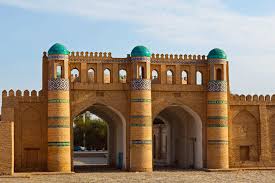
Many residents were involved in the construction , and the castle was completed in 6 weeks . There were 10 gates in Dishan fortress : Hazorasp (Sheep), Pishkanik, Bogi zahal, Shaikhlar, Tozabog, Shahimardan, Doshoyak, Kosh, Gadoylar and Gandumiyan (other than Hazorasp and Kosh gates have not been preserved).
The main streets of the Dishan castle (Hazorasp, Bogi shalol, Shahimardan, Kosh), Nurullabai palace , Syedboy madrasah and mosque, Syed Mohi rui Jahon , Tort Shabboz , Abdolbabo complexes have been preserved. Administrative and household buildings and avenues have been built in the Dishan fortress.
Day 8: Khiva Exploration
Morning:
Khojamberdibi (Khurjun) madrasa: From the number of 8th day, you will start your journey at morning from Khojamberdibi madrasa, and you will must include this place in your plan for Uzbekistan trip, which is located east of the Polvan Gate , and was built by local landowners in 1688.
According to another source, the madrasa was built by Muhammad Rizobek in 1694-1695, and the main gable of the madrasa was built facing the bathhouse of Anusha Khan on the south side. This monument is one of the oldest madrasahs in Khiva . Almost 150 years later, in 1834, Khan of Khiva Olloquli Khan Qutlugh Murad built a madrasa and a mosque for Inaq.
Under the pretext of building a new madrasa named Olloqulikhan madrasa , the Khojamberdibi madrasa will be rebuilt with two courtyards and its door will face the west. The mosque and adjoining rooms have been preserved from the previous madrasa. As a result of the destruction of a part of the city wall during the construction process, the exterior of the madrasa fell into the courtyard of the Khojamberdibi madrasa.
The reason for this was that the foundations of the two buildings were not at the same height. The large gable of the madrasa was demolished and a low passage connecting the courtyards was built in its place – the gate house [4] . As a result, the inner courtyard of the Khojamberdibi madrasa was divided into two parts and had a look reminiscent of a covered courtyard .
After that, the madrasa was called “Khurjun madrasa” among the residents. On the marble stone above the door of the madrasa is written when and by whom it was built. It contains the following inscriptions: ” Muhammad Rizobek, the son of Khojamberdibi, who was originally from the people of Qiyat .” According to records, the madrasa was renovated almost a hundred years later during the reign of Muhammad Amin.
Afternoon:
Friday Mosque: Explore the 218 wooden pillars in this mosque—some of which are from the tenth century—by exploring it. Juma Mosque was one of the prominent buildings of the city in the Middle Ages. It is distinguished by its unique construction and size.
This monument is reminiscent of the old mosques of Khorezm. It occupies a large area of 55×46 meters and is built with many columns.
This building is located on the edge of the main street surrounding the eastern and western gates of “Ikhon-Kal’a”. Al-Maqsidi, an Arab traveler who came to Khorezm in the 10th century, mentioned Khiva’s Juma Mosque for the first time. However, according to the statements of Khivaliks who have been living there for a long time, the old mosque was destroyed, and in its place, in 1788, the present mosque was built on the basis of the same plan.

The exterior of the mosque building is very simple, its height is 4.5 meters, and the height of the minaret is 42 meters. The Juda Mosque is a one-story flat-roofed building with 213 pillars. The mihrab of the mosque is located on the southern wall of the room.
The mihrab, as usual, has high shelves on its sides to make it stand out, and the ceiling is made higher. On the walls of the two sides of the mihrab, carved letters are written on the marble stones, one of the letters is a waqfnama dated 1203 AH (1788-89) in connection with the donation of the mosque’s property and funds, and the other is information about the history of the mosque written in 1666.
There is an opinion among the residents that the mosque was renovated at the end of the 18th century. This is also mentioned in the letter written on the carved door of the southern facade. It says that the mosque was repaired in 1788-89 under the leadership of Abdurahman Mekhtar.
15 of the ancient decorative columns have been preserved in the mosque, 8 columns are kept in the Museum of the History of the Peoples of Uzbekistan in Tashkent.
According to Professor Ya. Ghulomov, some of these pillars are the oldest monuments of the art of wood carving in all of Uzbekistan. The restoration of this rare monument began in 1979 based on the project of architect Sonechkin. In 1983, 108 pillars of Juma Mosque were bought from the residents.
It was replaced by decorated columns from the beginning of the 18th-20th centuries. In 1996-1997, Juma Mosque was renovated and most of the pillars were replaced. So if you don’t include this place in your Uzbekistan trip plan, you will missed a unique lovely place of Uzbekistan.
To know more about darkt tourism click the link:
Evening:
Olloqulikhan Caravanserai: Then discover this beautiful City. The city had a market square where markets were located, including a slave market. Due to the development of trade with Bukhara, Iran and Russia, the market space becomes narrow.
At the beginning of the 19th century (1832-1833), the Caravanserai was built by order of Olloquli Khan. It combined hotels, warehouses and trading places for merchants.
The caravanserai is completely devoid of decoration. The surface of the facades is covered with clay-straw plaster. The courtyard is plastered with rough plaster. Its planning is as simple and functional as possible: a large courtyard area and two-story rooms. The presence of a passageway facilitates the delivery of bagged goods and facilitates the unloading process. By visiting this Olloqulikhan caravanserai will be end your parts of uzbekistan trip for 8th days.
Day 9: Khiva to Nukus
Morning:
Transfer to Nukus:

Travel to Nukus, which is well-known for the Savitsky Museum, which has one of the largest collections of avant-garde Russian art. And select Savitsky Museum place for your Uzbekistan trip plan for afternoon.
Afternoon:
Savitsky Museum: Then you should definitely visit the legendary Savitsky art museum in Nukus. The founder of the museum, Igor Vitalyevich Savitsky, first came to Karakalpakstan in 1950 and fell in love with this unfamiliar land from the first days of his visit. He expressed his love for the nature of Karakalpakstan, its history, culture and people through the collections presented in the museum opened in 1966. Since then, he has devoted his life to filling the museum’s exhibits, which include paintings not only by famous artists, but also by unknown artists.

Why is the museum called the second “Louvre”? Because its collection is the best art collection in the Asian region and has the second most important and largest collection of works of the Russian avant-garde, and in 2001 the English newspaper “The Guardian” called it “one of the most beautiful museums in the world”. Your uzbek trip will be unforgettable thanks to this museum visit.
Evening:
Nukus Market: Then you should visit their local market for experiencing of their regional lifestyle. In this market has a many outstanding place where you will see and can purchase their local products, from fresh produce to handcrafted goods.
Day 10: Departure from Tashkent
Morning:
Flight to Tashkent: This is the last day, and in this day you have to come back to Tashkent for your departure. Now is a great moment to look back on all of the amazing events and memories you have made over the last 10 days.

Flight to Tashkent
Afternoon:
Last-Minute Shopping:

Last Minute shopping
Visit the local shop for shopping. Tashkent has many market and boutiques, in this place you will find out their traditional Uzbek crafts, textiles and other unique things.
Evening:
Departure:

For your flight home, travel to International Airport of Tashkent. Now is the time to look over your pictures and remember the most memorable parts of your journey in Uzbekistan.
And finally we hope this 10 days Uzbekistan trip Plan will give you a wonderful and memorable experience.

Have a wonderful Journey!!!